2026-11-11 · Derek Jensen
Handling Frozen Pipe Bursts During Madison Cold Snaps
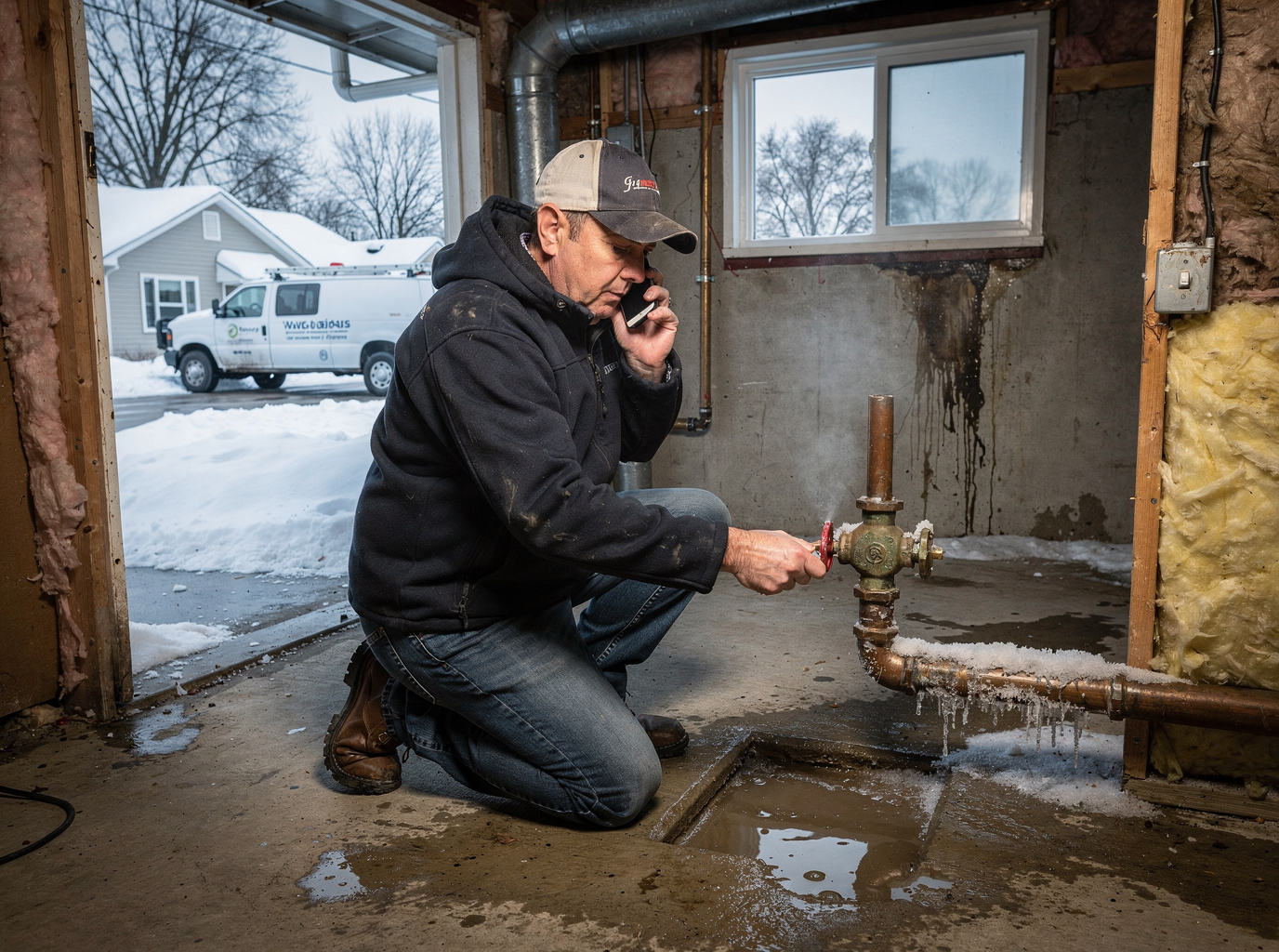
When a pipe bursts from freezing during a Madison cold snap, shut off the main water valve at once, drain remaining lines, and contact water damage restoration within the first hour to extract standing water before it migrates into subfloors or walls.
Why Madison Winters Trigger Pipe Bursts
Madison experiences a humid continental climate with prolonged cold snaps that drop temperatures well below freezing for days. Older housing stock built before 1970 in neighborhoods such as the Isthmus, Downtown, and East Side often has copper or galvanized lines running through uninsulated exterior walls or crawl spaces. These conditions allow water to freeze and expand, splitting pipes at joints or elbows. West Side ranch homes and properties in Shorewood Hills face similar risks where attics lack sufficient insulation near supply lines. Snow accumulation on roofs can further insulate pipes unevenly, creating cold pockets that accelerate freezing. Nearby cities like Middleton and Verona see the same pattern because they share Dane County's terrain and winter wind exposure.
Immediate Response Steps in Dane County Homes
Locate the main shutoff, usually in the basement near the water meter, and turn it clockwise until tight. Open faucets on all floors to relieve pressure and allow trapped water to drain. Move furniture and belongings away from affected zones, especially in single-story homes common on the West Side. Document the damage with photos before any cleanup begins. Avoid using household fans or dehumidifiers until extraction equipment arrives, because improper airflow can drive moisture deeper into plaster or hardwood. Properties near Monona or Fitchburg often have finished basements where water travels quickly under carpet pads, requiring prompt removal of those materials to prevent hidden saturation.
Drying and Repair Realities After a Burst
Professional drying typically requires 3 to 5 days of air movers and dehumidifiers running continuously, depending on how far water traveled into insulation or subflooring. In Madison's older two-story homes on the East Side, moisture often wicks upward into second-floor ceilings, extending the timeline. Technicians monitor moisture readings daily until levels return to the 10-12 percent range typical for local lumber. Once dry, damaged sections of pipe are replaced with PEX or copper, and any compromised drywall or flooring is cut out and rebuilt. Homes in Maple Bluff with finished lower levels may need additional antimicrobial treatment on joists to address the higher humidity that follows snowmelt periods.
Preventing Recurrence in Local Conditions
Insulate exposed pipes in crawl spaces and attics with foam sleeves rated for at least R-6 before the next cold snap arrives. Keep cabinet doors open under sinks during extreme lows so household heat reaches supply lines. In neighborhoods like Monona and Fitchburg, where many homes sit on sloped lots, ensure downspouts direct meltwater away from foundations to reduce soil saturation that can conduct cold into basements. Scheduling an annual inspection of water lines before November helps identify weak joints common in pre-1980 construction across Dane County.
Related Resources for Madison Homeowners
Review additional guidance on roof-related moisture in our article Preventing Ice Dam Leaks in Madison Attics. For details on how lake proximity affects water movement, see What to Expect When Basement Water Enters Near Lake Mendota. When full restoration is needed, explore our Water Damage Restoration and Water Damage Repair services that serve Middleton, Sun Prairie, and Verona as well.