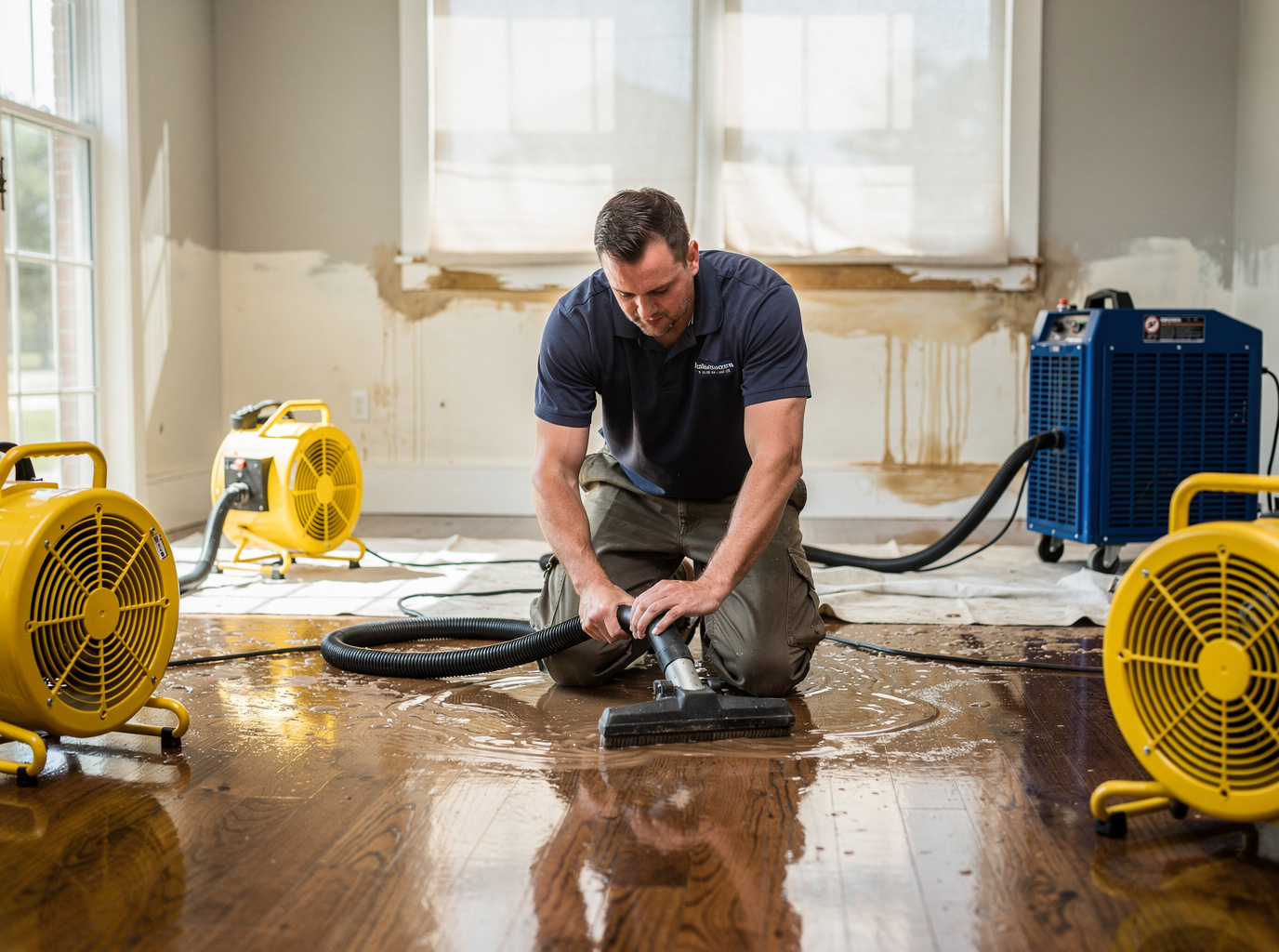
Madison's older housing stock on the Isthmus and East Side often features plaster walls over lath and balloon framing that hides moisture behind layers, allowing hidden mold to develop weeks after a roof leak or pipe burst. In neighborhoods like Shorewood Hills and Maple Bluff near Lake Mendota, high water tables and clay soils slow natural drainage, so technicians must use moisture meters on subfloors and behind baseboards rather than relying on surface drying alone. Freeze-thaw cycles common in Dane County's humid continental winters push ice into foundation cracks on the West Side and in Monona, expanding small entry points into larger structural problems that require targeted demolition before drying begins.
Summer humidity spikes combined with sudden thunderstorms frequently overwhelm sump systems in Fitchburg and Verona basements, where finished lower levels with carpet and drywall demand rapid extraction to prevent saturation of particleboard underlayment. Near the University of Wisconsin-Madison campus and Monona Terrace, multi-unit buildings share plumbing stacks that can send water into multiple units, requiring coordinated containment to avoid cross-contamination. Crews working from the College Court location know to check attic insulation in Maple Bluff homes after ice-dam leaks, because cellulose that holds moisture can re-wet drywall ceilings long after the initial event.
Local building practices in Downtown Madison mean many pre-1950 homes still have cast-iron drains that crack under shifting soils, sending wastewater into crawlspaces that lack vapor barriers. Restoration teams must separate clean water from category three water quickly, using air movers and dehumidifiers sized for the square footage while documenting moisture readings for insurance adjusters. Properties in Sun Prairie and Middleton with newer construction still face issues from poor grading around slabs, so final walkthroughs always include checking exterior grading to reduce repeat calls after heavy spring rains.
Technician insight
In Madison the thing that catches most people out with water damage restoration is how quickly moisture travels through balloon-framed walls on the Isthmus and East Side once it hits the knob-and-tube wiring era homes; a small ceiling leak near the Wisconsin State Capitol can wet an entire chase down to the basement before anyone notices.
Ice-dam leak on the East Side
A homeowner on the East Side noticed ceiling stains after a January thaw. Inspection found melted snow had entered at the roof edge and traveled behind plaster into second-floor walls. Crews removed wet insulation, dried the cavities with targeted equipment, and confirmed readings before the owner arranged repairs.
Water Damage Restoration Services We Offer
✓Basement Water Extraction
Removes standing water from Dane County basements after storms or appliance failures using truck-mounted pumps suited to clay-soil drainage conditions.
✓Structural Drying and Dehumidification
Deploys industrial drying equipment in older Isthmus and East Side homes where plaster and lath trap moisture behind surfaces.
✓Sewage Cleanup and Sanitation
Handles category three water from backed-up drains common in pre-war Downtown buildings, including antimicrobial treatment of affected framing.
✓Carpet and Flooring Restoration
Extracts water from hardwood and carpet in Shorewood Hills and Monona homes while preventing cupping or delamination from prolonged humidity.
✓Attic Insulation Removal
Removes wet cellulose or fiberglass after ice-dam leaks near the Wisconsin State Capitol and University of Wisconsin-Madison campus.
✓Ceiling and Wall Repair Prep
Opens and dries cavities in Maple Bluff and Fitchburg homes before reconstruction to eliminate hidden moisture in balloon framing.
Water Damage Restoration Cost in Madison, WI
| Service | Typical Range | What Affects It |
|---|---|---|
| Category 1 water extraction and drying | $800–$2,200 | Depends on square footage and number of rooms in single-family homes. |
| Category 3 sewage cleanup | $1,800–$4,500 | Higher when wastewater reaches finished basements on the East Side. |
| Attic insulation removal after ice dam | $650–$1,400 | Varies with access and whether plaster ceilings must be opened. |
| Emergency after-hours response | $250–$450 | Added to base job when called outside Mon–Fri 8am–6pm or Sat 9am–2pm. |
Ranges are typical for Madison, WI and confirmed with an exact written quote before any work starts.
How it works
- 1
Initial Assessment
Technician inspects the property in the reported neighborhood, maps affected materials, and identifies hidden moisture paths typical in Madison's older housing.
- 2
Water Extraction
Removes standing and trapped water using pumps and wands, focusing on crawlspaces and slab edges common on the West Side and in Monona.
- 3
Drying And Monitoring
Places air movers and dehumidifiers, then tracks daily moisture readings until levels match unaffected areas in the structure.
- 4
Sanitation And Containment
Applies treatments to prevent microbial growth and removes unsalvageable materials before returning the space to pre-loss condition.
- 5
Final Verification
Walks the homeowner through documented dry readings and checks exterior grading to reduce future risk from Dane County weather patterns.
Pricing
Pricing varies by water category, affected square footage, and whether hidden cavities in older Madison homes require additional demolition.