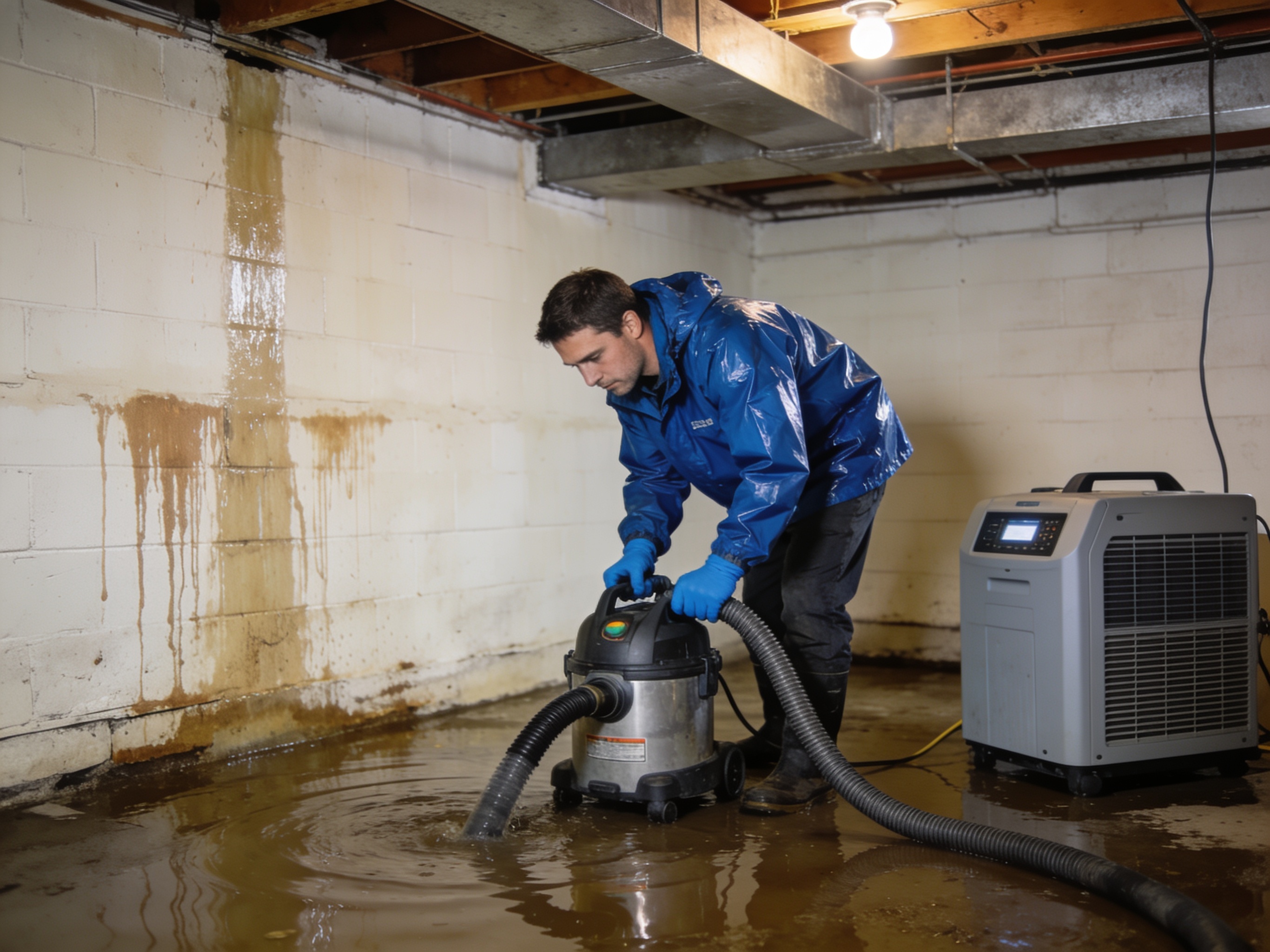
Madison's older housing stock in the Isthmus and Downtown neighborhoods often features plaster walls and balloon-framed construction that lets water travel upward and behind finishes faster than in newer builds. When a pipe bursts or snow melt backs up against a foundation on the East Side, crews must pull baseboards immediately and check for hidden pockets along the joist bays before mold sets in during the humid summer months.
Winter freezes followed by rapid thaws create a predictable pattern in Shorewood Hills and Maple Bluff where roof ice dams send water under shingles and into attics. Extraction here requires careful removal of blown-in insulation without collapsing ceilings, plus monitoring for secondary damage to knob-and-tube wiring common in pre-1950 homes. Crews also watch for runoff from the slight grade changes near Lake Monona that can push water under slabs on the West Side.
In Fitchburg and Monona, finished basements with carpet over concrete are frequent sites of sump pump failures during heavy spring rains. Removing water quickly means lifting carpet in sections to avoid stretching, then using air movers positioned to push moisture out through existing egress windows rather than up stairwells that could affect upper levels.
Nearby cities such as Middleton, Sun Prairie and Verona see similar issues in ranch homes built on clay-heavy soils that hold water against foundations longer than sandy areas. Technicians route extraction hoses through garage doors or side entries to limit tracking through living spaces and document every step for insurance adjusters who know Dane County claims patterns.
Technician insight
In Madison the thing that catches most people out with Emergency Water Removal is how quickly water travels upward through plaster in the balloon-framed homes on the Isthmus and Downtown; if you only pull the carpet you will miss the wet studs behind the baseboards and the job doubles in size once it sits through a humid summer weekend.
East Side basement after spring thaw
A homeowner on the East Side called after snow melt pooled against the foundation and entered through a cracked sill plate. We found six inches of water across the finished basement plus moisture wicking two feet up the plaster walls. Extraction and carpet removal took four hours; we left air movers running and returned the next day to confirm readings below 12 percent.
Emergency Water Removal Services We Offer
✓Basement Flood Extraction
Removes standing water from finished and unfinished basements common in Madison's older neighborhoods before it reaches electrical panels or HVAC systems.
✓Carpet and Pad Removal
Cuts and disposes of saturated carpet and padding in one trip to prevent wicking into subfloors on East Side and West Side homes.
✓Appliance Leak Extraction
Extracts water from refrigerator, washer or water heater failures that often pool under cabinets in compact Isthmus kitchens and bathrooms.
✓Attic Water Removal
Drains and dries water that enters through ice dams or roof leaks above ceilings in Shorewood Hills and Maple Bluff homes.
✓Crawl Space Drying
Pumps out and ventilates water from low crawl spaces found under many pre-war homes in Downtown and Monona.
✓Sewage Water Extraction
Handles contaminated water from backups that enter through floor drains during heavy rains in low-lying Fitchburg and Verona properties.
Emergency Water Removal Cost in Madison, WI
| Service | Typical Range | What Affects It |
|---|---|---|
| Single-room extraction under 1 inch | $250–$450 | Higher when carpet and pad must be cut and hauled |
| Basement extraction over 200 sq ft | $600–$1,100 | Increases with sewage contamination or multiple rooms |
| Attic or ceiling water removal | $400–$750 | Depends on insulation type and access points |
| Crawl space pump-out and drying | $350–$650 | Higher when standing water exceeds 6 inches |
Ranges are typical for Madison, WI and confirmed with an exact written quote before any work starts.
How it works
- 1
Arrival And Safety Assessment
Technicians arrive in a marked van, shut off power to affected zones if needed, and identify the water source while protecting unaffected rooms.
- 2
Water Extraction
Submersible pumps and truck-mounted units pull standing water from floors, carpets and cavities, routing hoses through exterior doors whenever possible.
- 3
Moisture Mapping
Infrared cameras and moisture meters locate hidden water in walls, under cabinets and in joist bays typical of Madison's older construction.
- 4
Initial Containment And Drying Setup
Air movers and dehumidifiers are placed, baseboards removed, and small holes drilled for airflow behind wet plaster or drywall.
- 5
Documentation And Handover
Photos, moisture logs and a written plan are provided before the team leaves the site for the next phase of drying or repairs.
Pricing
Pricing depends on water volume, number of affected rooms, and whether carpet or insulation must be removed.