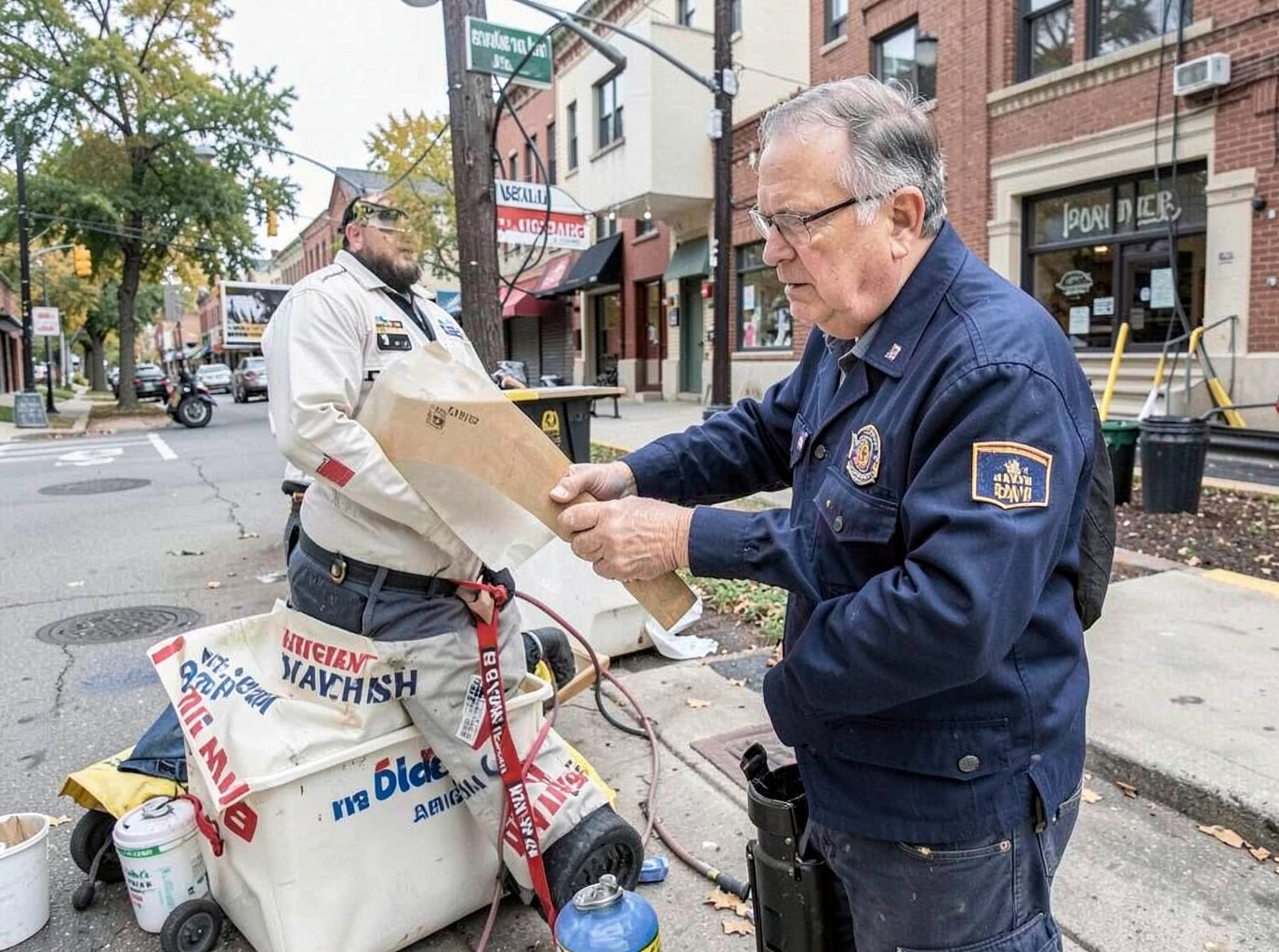
Madison's older housing stock, especially pre-1960 homes on the Isthmus and East Side, often features plaster walls, lath, and unfinished basements that trap water quickly. Once winter temperatures drop and snow melts in spring, groundwater rises against clay soils common in Dane County, pushing moisture through foundation cracks and under slabs. Technicians must remove baseboards and drill weep holes early to prevent hidden mold growth behind drywall.
Summer humidity in the 70-80 percent range slows natural drying on the West Side and in Fitchburg, where newer split-level homes have finished lower levels with carpet and engineered flooring. Extraction units and air movers must run longer here than in drier climates, and technicians check for trapped moisture in HVAC returns that can spread odors house-wide. Monona and Maple Bluff properties near the lakes also face occasional sewer backups after heavy rains that require containment before any demolition begins.
Work near the University of Wisconsin-Madison campus and Downtown high-rises often involves coordinating with property managers for after-hours access and elevator use. Crews document every step with photos because insurance adjusters in Dane County want clear proof of affected square footage before approving drying equipment.
Nearby Middleton, Sun Prairie and Verona see similar patterns but with more crawl spaces that require different dehumidifier placement than full basements. Technicians always test moisture in joists before closing walls to avoid callbacks once humidity spikes again.
Technician insight
In Madison, the thing that catches most people out with Emergency Water Damage Restoration is how quickly water travels under the slab in East Side and Isthmus homes built on clay. Homeowners often stop at visible puddles and miss moisture that has wicked into subflooring, which then shows up weeks later once humidity climbs again.
East Side Basement Flood
A homeowner on the East Side called after spring snowmelt sent water through a foundation crack into a finished lower level. We found moisture had traveled under the slab and into the carpet pad across two rooms. Extraction and targeted drying prevented mold growth behind the baseboards; the family was back in the space within five days.
Emergency Water Damage Restoration Services We Offer
✓Basement Water Extraction
Remove standing water from Madison basements using truck-mounted pumps before it migrates into finished living areas on the East Side or Isthmus.
✓Ceiling and Drywall Drying
Locate and dry water trapped above ceilings in older plaster homes common in Downtown and Shorewood Hills without unnecessary demolition.
✓Sewage Backup Cleanup
Contain and remove contaminated water from Monona or Fitchburg properties after heavy rains or main line failures.
✓Carpet and Pad Removal
Extract saturated carpet and padding in West Side split-levels and replace with antimicrobial treatments to stop odor and mold.
✓Crawl Space Drying
Dry and ventilate crawl spaces in Middleton and Verona homes where clay soils hold moisture against joists year-round.
Emergency Water Damage Restoration Cost in Madison, WI
| Service | Typical Range | What Affects It |
|---|---|---|
| Water Extraction | $250–$700 | Depends on gallons removed and access in older basements |
| Drying Equipment Rental | $150–$450 per day | Number of air movers and dehumidifiers required |
| Drywall Removal | $3–$6 per sq ft | Height of cut and disposal in multi-story homes |
| Sewage Cleanup Add-On | $400–$900 | Containment and disinfection for black water events |
Ranges are typical for Madison, WI and confirmed with an exact written quote before any work starts.
How it works
- 1
On-Site Assessment
Technician inspects all affected rooms, checks moisture levels in walls and floors, and identifies the water source in the specific Madison neighborhood.
- 2
Water Removal
Pump out standing water and extract trapped moisture from carpets, drywall and insulation using professional equipment.
- 3
Drying And Dehumidification
Place air movers and dehumidifiers, monitor daily moisture readings, and adjust placement until materials reach safe levels.
- 4
Final Inspection
Verify all surfaces are dry, remove equipment, and provide documentation for insurance.
Pricing
Pricing varies by water volume, affected square footage, and whether contents need moving; most jobs start with a free assessment during business hours.