2026-11-11 · Derek Jensen
Preventing Ice Dam Leaks in Madison Attics
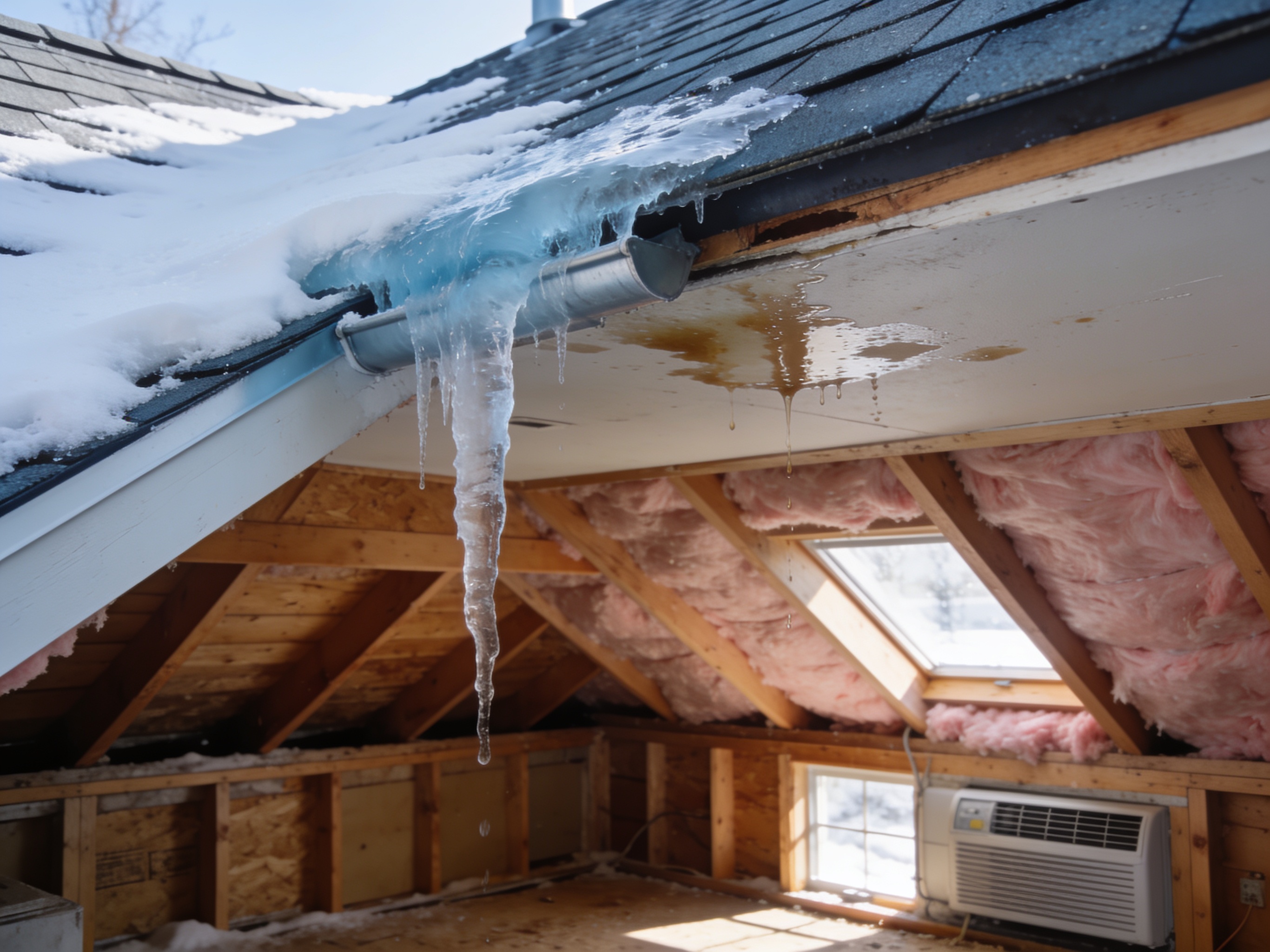
Madison homeowners face ice dam leaks when snow melts on warm roof sections then refreezes at the eaves. In Dane County homes built before 1980, especially on the Isthmus and East Side, inadequate insulation allows attic heat to escape and trigger this cycle during the first major snowfall. Addressing the temperature difference between the attic and outside air prevents water from backing up under shingles and soaking insulation or drywall.
How Madison Winters Form Ice Dams
Dane County's humid continental climate brings repeated freeze-thaw cycles from December through March. Snow accumulates on roofs in Downtown and Shorewood Hills, then melts when attic temperatures rise above 32°F. The meltwater flows to the colder eaves and forms a dam that forces water under shingles. Older two-story homes near the University of Wisconsin-Madison often have R-19 or lower insulation, which accelerates the problem. West Side ranches with cathedral ceilings lose heat even faster through the roof deck.
Homeowners in Maple Bluff and Monona see the same pattern after heavy snow events followed by a sunny day. Heat from recessed lights, bathroom fans, and unsealed chimney chases keeps the attic 10–15 degrees warmer than outside. Once the dam grows 6–8 inches thick, water pressure pushes it behind the gutter and into the attic space. This process repeats with each new storm until March.
Insulation and Ventilation Upgrades That Work
Add blown-in cellulose or fiberglass to reach R-49 or higher across the entire attic floor in Madison homes. Seal all penetrations around pipes, wires, and light fixtures first so warm air cannot bypass the insulation. Install continuous ridge and soffit vents sized at 1 square foot per 150 square feet of attic floor to maintain airflow even when snow covers the eaves. These changes keep the roof deck temperature within a few degrees of outside air, stopping meltwater from forming.
In Fitchburg and Verona split-levels, baffles must be placed between rafters to keep insulation from blocking soffit vents. Attic fans tied to a thermostat set at 35°F provide extra airflow during January thaws. Homeowners who complete these upgrades report no new ice dams for the next 8–12 winters when combined with annual gutter cleaning.
Monitoring and Maintenance Through Winter
Check attics monthly from November to March for melted spots in the snow or water stains on rafters. Use an infrared thermometer to spot roof sections more than 5 degrees warmer than surrounding areas. Clear gutters and downspouts before the first snow so meltwater has a clear path away from the foundation. Remove snow from the lower 3–4 feet of roof with a roof rake after storms heavier than 6 inches.
On the West Side and in Middleton, trees that shade the roof slow snow melt and reduce dam formation. Trim branches that hang within 6 feet of the roof edge. Keep heat sources such as bathroom exhaust fans and recessed lights off during cold snaps to limit attic warming. These steps reduce the frequency of ice dam formation by more than half in typical Dane County winters.
When Leaks Appear Despite Prevention
Even well-prepared attics can develop leaks after an extreme cold snap. Water that reaches drywall or insulation requires prompt drying to avoid mold in Madison's humid summers. Water damage repair crews familiar with local construction can locate the entry point and restore affected ceilings without removing entire sections of drywall. Handling frozen pipe bursts during Madison cold snaps shares similar drying techniques that apply directly to ice dam water.